Whats Cooking
inspiring to cook n bakeCategories
- Basics
- Beauty
- Beef, Mutton And Pork
- Beverages, Smoothies And Juices
- Break Fast Dishes
- Cakes, Cookies And Bakes
- Chocolate, Ice Creams And Frozen Treats
- Cocktails, Mocktails And Wines
- Continental And Indian Breads
- Desserts
- Dips, Chutneys And Sauces
- Household
- Masalas
- Paneer
- Pickles, Preserves And Jams
- Poultry And Egg
- Rice, Noodles And Pasta
- Salads And Sandwiches
- Seafood
- Snacks, Sweets And Savories
- Soups, Starters And Accompaniments
- Vegetarian
Feedback
DISH NAME : HOME MADE GHEE (CLARIFID BUTTER)
Cooking Time : 35 to 45 minutes
Description
Ghee is widely used in India for routine daily cooking, festive cooking and in medicines. Hence ghee holds a lot of importance in India.
Ayurvedic Note
Ghee is a revered cooking medium in Ayurveda. The ancient texts call it a rasayana, which means a healing food that balances body and mind, thus promoting longevity. Modern research has established that ghee is an antioxidant and contains beta-carotene. Being free of milk solids, ghee does not spoil easily. Further you can use it frugally in your cooking and yet get rich a aroma and flavour.
| Quantity | Name | |
|---|---|---|
| GHEE | ||
| 1 Kg. | Butter (saltless) | |
Method
To make butter:-
To make ghee, we need butter. Butter can be made in two different methods. Traditionally butter is churned from home made curd and the ghee made from the traditionally churned butter happens to be the healthiest and the pure form of ghee. The second method is by collecting the cream that settles on top of the milk for several days and a little curd is added to the cream the day before it is made into ghee. This will add culture to the cream and make it into curd. This curd is churned to extract butter which is then melted to make ghee. Proceed as given below after you get butter. We can also make ghee from store bought butter which is not processed. Table butter which is used to spread on bread is the proceesed one and it will stay like that for months on. Unprocessed butter is usually pure butter which has very short shelf life and is kept immersed in water.
1) Place butter in a saucepan and slowly melt over medium heat.
2) When the butter comes to a boil, reduce the heat and simmer the butter uncovered and undisturbed for 35 to 40 minutes.
3) As the temperature reaches the boiling point of water, water content in butter vaporises, the butter foams and makes tiny, sharp crackling noises.
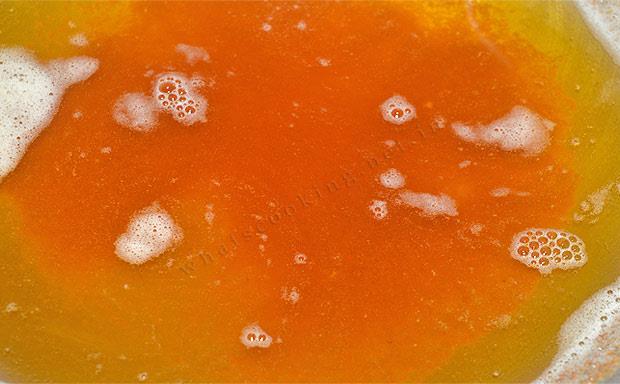
4) The milk solids in the butter slowly settle down to the bottom, leaving a pale golden liquid on top, which you can sieve into a clean glass jar. This is ghee (clarified butter).
Serving Suggestions
Serve on hot rice or use as directed in recipes.